


Post-Disaster Ruins Drone Aerial Damage Assessment Dataset
#image segmentation #image classification #object detection #damage assessment #post-disaster reconstruction #building damage assessment #engineering project management #safety monitoring
- 500 records
- 1.6G
- JPG
- CATL
 MOBIUSI INC
Updated:2026-09-20
AI Analysis & Value Prop
The current real estate industry faces an increasing risk of natural disasters and an urgent need for rapid post-disaster assessment and recovery. Existing assessment methods rely heavily on on-site manual inspections, which are inefficient and costly, especially posing personal safety risks in post-disaster harsh environments. The Post-Disaster Ruins Drone Aerial Damage Assessment Dataset aims to enable fast, low-cost, and safe building damage assessments through high-resolution aerial images and precise damage annotations. This dataset is collected from actual post-disaster scenarios, using advanced drone equipment under conditions without personal safety threats. The data undergo multiple rounds of annotation and consistency checks, reviewed by a professional team with architecture and engineering backgrounds to ensure annotation accuracy and consistency. Data preprocessing includes image enhancement, noise filtering, and lighting correction, and is ultimately stored in JPG format, finely organized by region and damage type. The core advantage lies in the high precision and completeness of the data quality, and the use of innovative annotation methods and data augmentation techniques significantly enhances damage recognition accuracy. In application, this dataset can significantly improve post-disaster damage assessment speed and decision-making accuracy, increasing assessment efficiency by at least 30%. Compared to other datasets, this dataset holds unique advantages in diversity and scarcity, demonstrating good scalability, and is suitable for damage assessment in different disaster scenarios.
Dataset Insights
Sample Examples
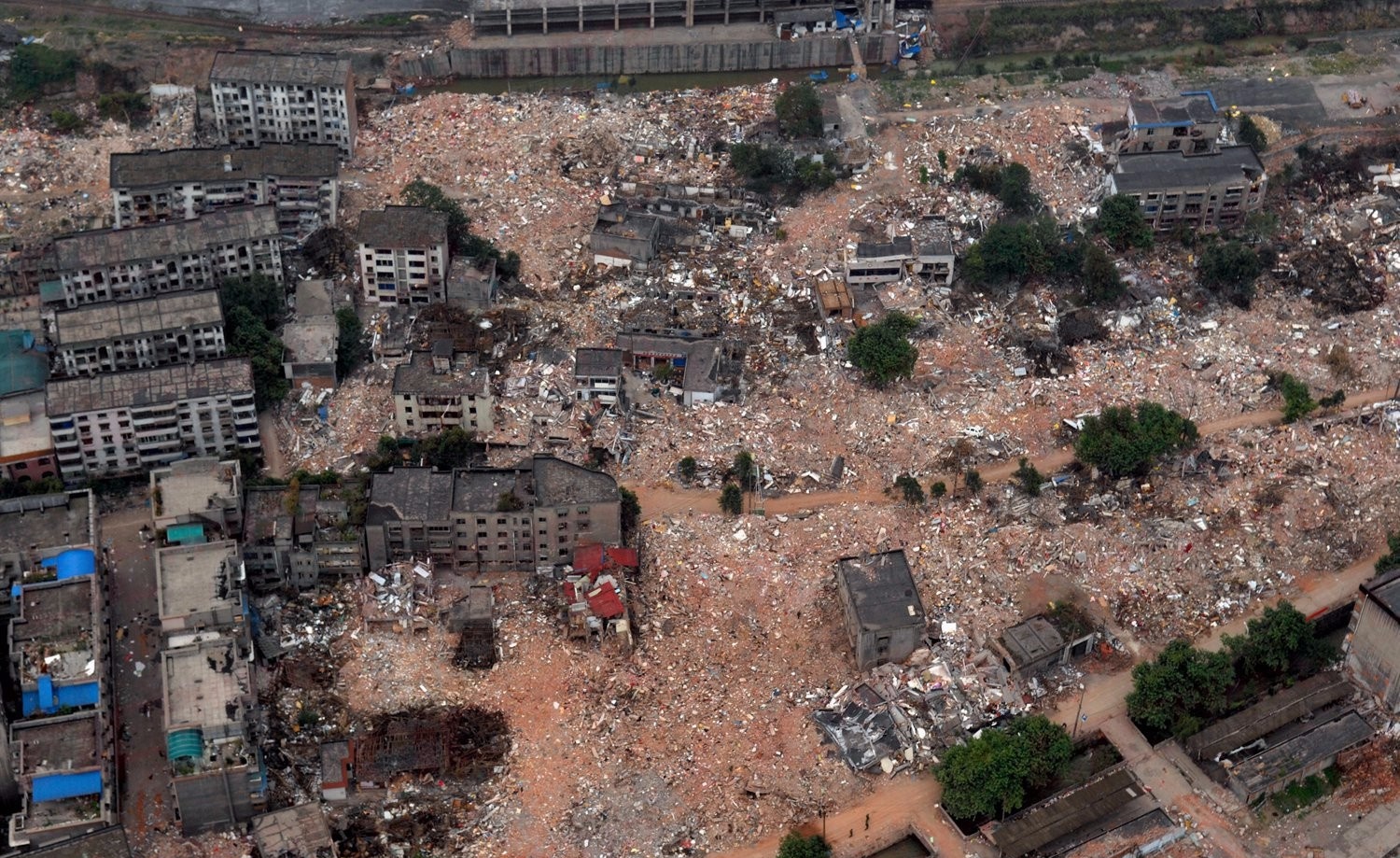
55863e3d**.jpg|1500*919|595.01 KB

f5bc0fed**.jpg|1600*929|741.31 KB

38e01dcd**.jpg|1280*720|334.60 KB


Technical Specifications
| Field | Type | Description |
|---|---|---|
| file_name | string | File name |
| quality | string | Resolution |
| damage_extent | string | Represents the level of damage to the building (e.g., minor, moderate, severe). |
| building_material | string | Identifies the primary material type of the building (e.g., concrete, brick, steel). |
| roof_condition | string | Used to assess the damage or integrity of the roof. |
| debris_presence | boolean | Indicates whether there are visible debris or rubble in the image. |
| floor_count | integer | Identifies the number of floors in the building. |
| window_intact | boolean | Assesses whether the windows remain intact. |
| wall_status | string | Assesses the condition of the walls. |
| vegetation_obstruction | boolean | Indicates whether vegetation is obstructing parts of the damaged building. |
Compliance Statement
| Authorization Type | Proprietary - Commercial AI Training License (No Redistribution) |
| Commercial Use | Requires exclusive subscription or authorization contract (monthly or per-invocation charging) |
| Privacy and Anonymization | No PII, no real company names, simulated scenarios follow industry standards |
| Compliance System | Compliant with China's Data Security Law / EU GDPR / supports enterprise data access logs |
Frequently Asked Questions
- What are the application scenarios for the post-disaster ruins UAV aerial damage assessment dataset?
- The dataset can be used for scenarios such as building damage assessment, post-disaster reconstruction planning, risk management, and emergency response.
- What is the resolution of the images in this dataset?
- The images in the dataset are high-resolution to facilitate accurate building damage assessment.
- How can this dataset be used for building damage analysis?
- By analyzing the high-resolution aerial images in the dataset, the location and extent of damage to building structures can be identified.
- How was this dataset collected and created?
- The dataset was created by capturing images of post-disaster ruins with drones and processing them professionally.
- What types of users is this dataset suitable for?
- The dataset is suitable for professionals such as civil engineers, disaster management personnel, and researchers.
- What are the potential technical challenges in using this dataset?
- Challenges may include handling large-scale high-resolution data and accurately interpreting complex damage patterns.
- What is the primary data source for the post-disaster ruins UAV aerial damage assessment dataset?
- The primary data source is drone aerial imagery captured from disaster areas.

Can't find the data you need?
Post a request and let data providers reach out to you.
Get this Dataset
Verified for Enterprise UseCite this Work
@dataset{Mobiusi2026,
  title={Post-Disaster Ruins Drone Aerial Damage Assessment Dataset},
  author={MOBIUSI INC},
  year={2026},
  url={https://www.mobiusi.com/datasets/a8f859e25102b9710a259bb822f17920?dataset_scene_id=18},
  urldate={2026-02-04},
  keywords={drone aerial dataset, building damage assessment, ruins image analysis, post-disaster reconstruction data},
  version={1.0}
}
Using this in research? Please cite us.
placeholder
placeholder
placeholder
placeholder
placeholder
placeholder
placeholder